
Last updated October 15, 2026
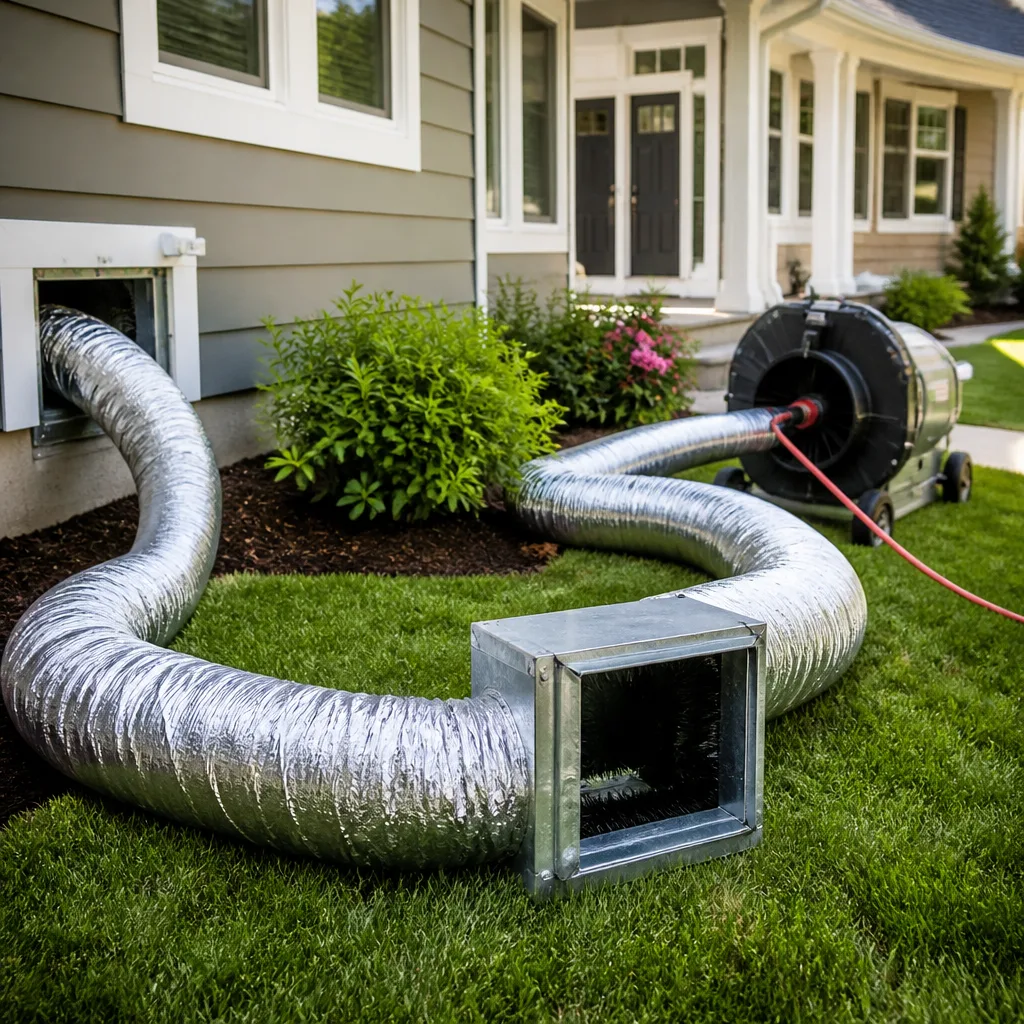 Whole-home duct cleaning
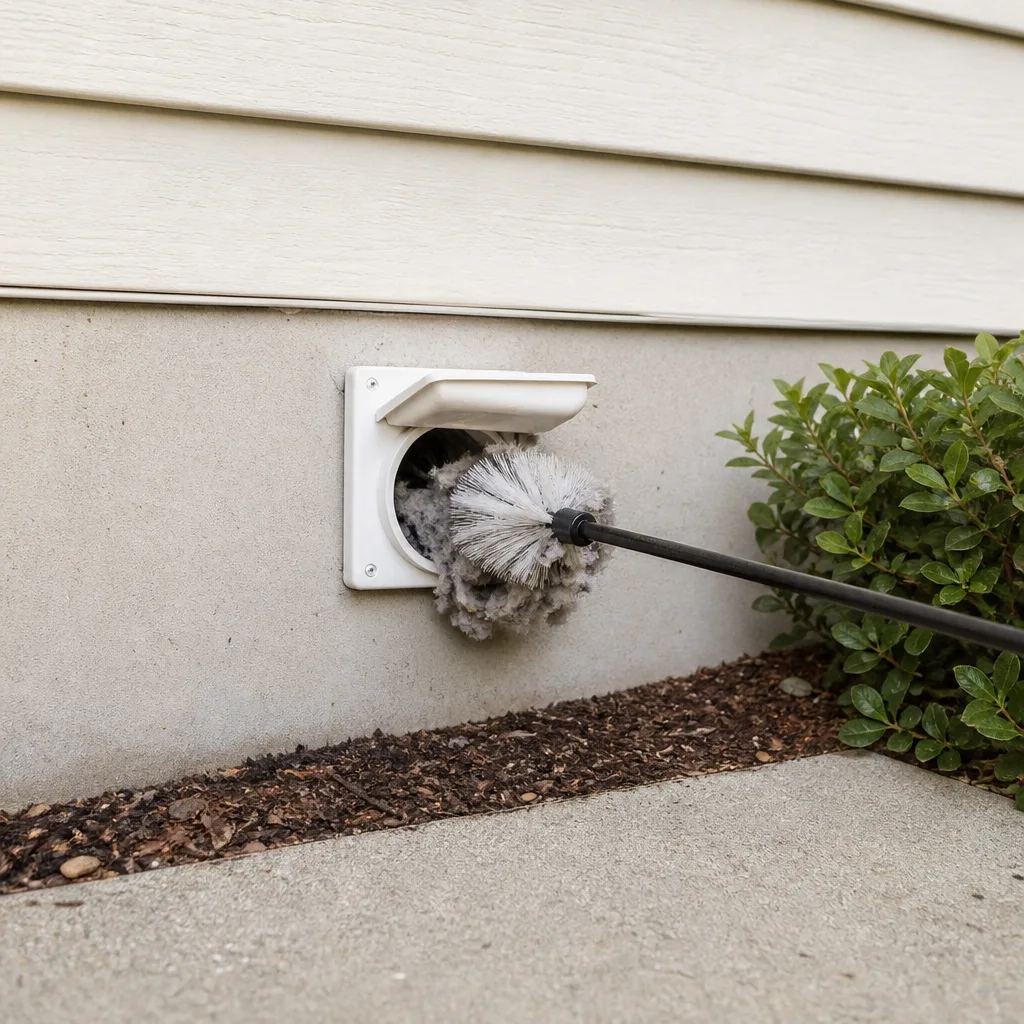 Dryer vent cleaning
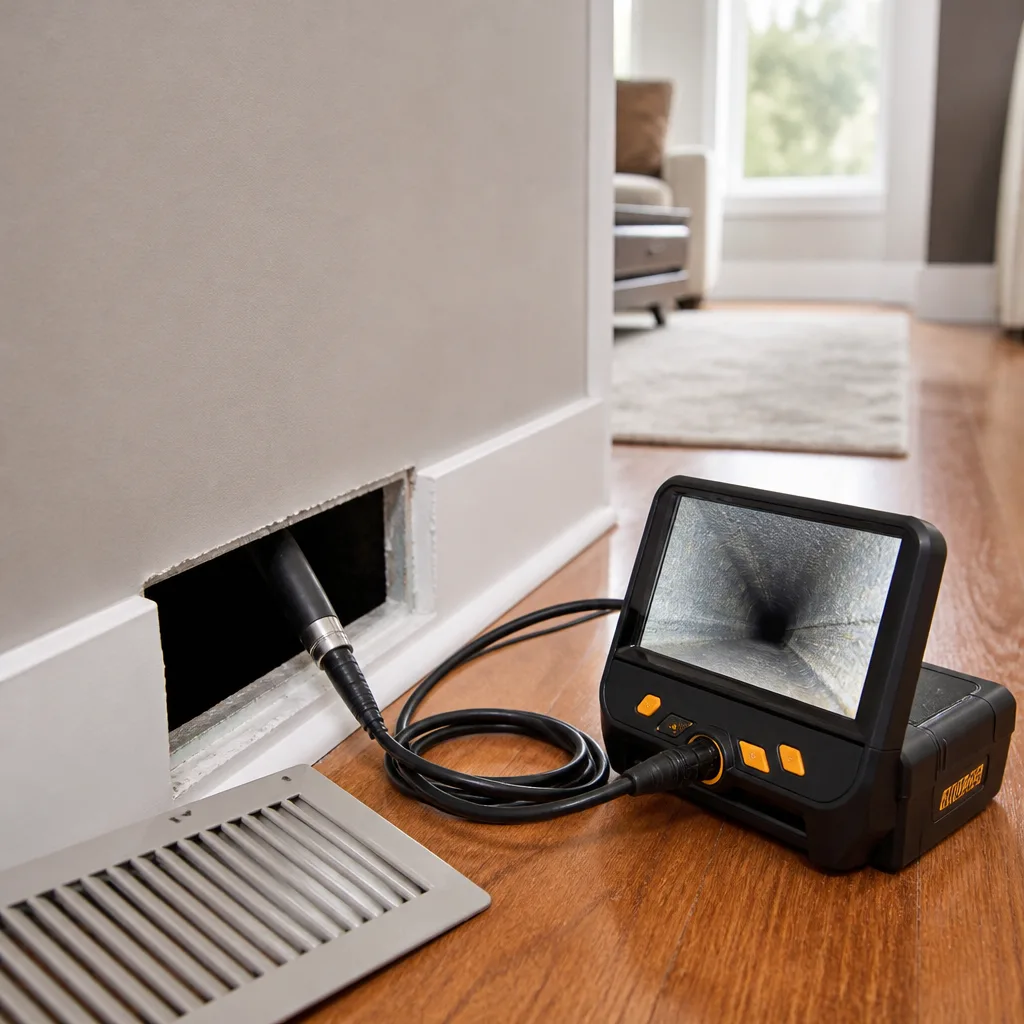 Camera inspection
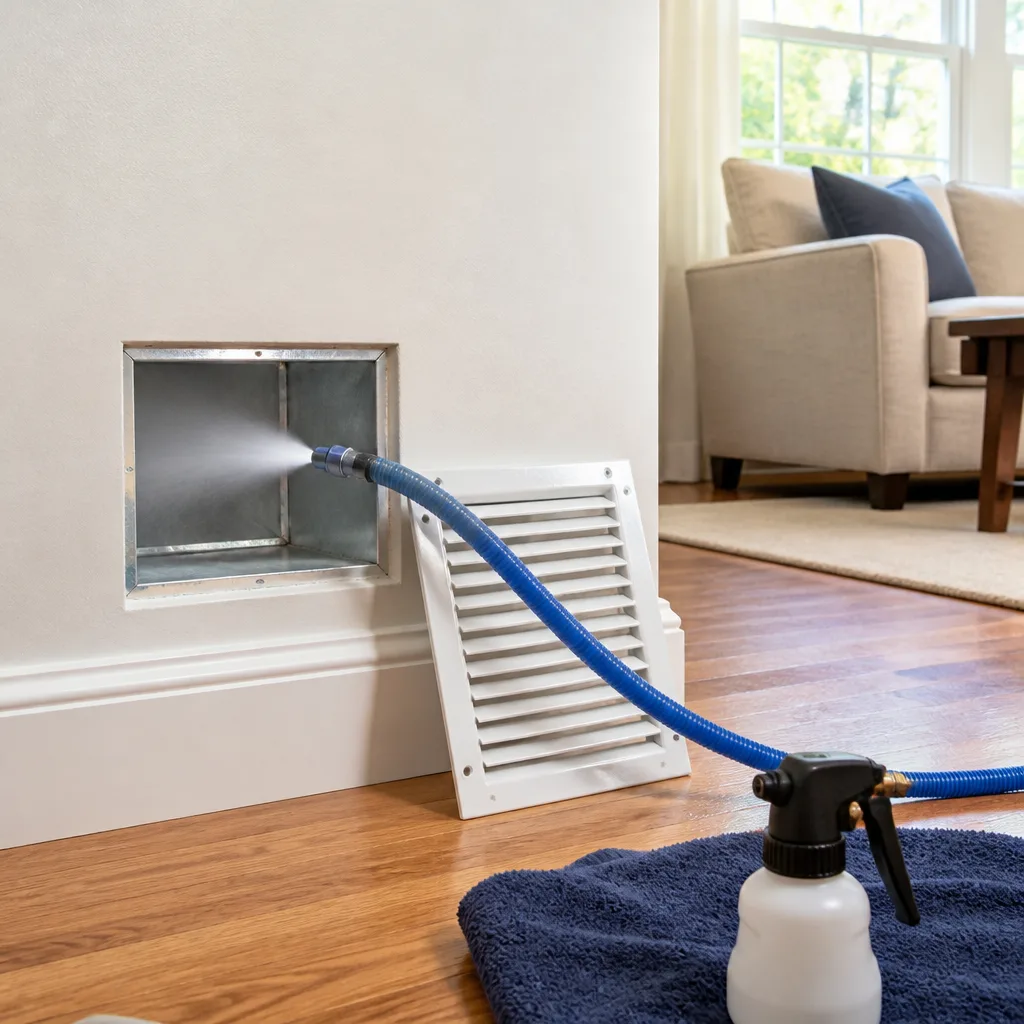 Sanitizing & deodorizing
Whole-system duct and dryer vent check with before-and-after photos - you see exactly what came out of your vents
That "$99 whole-house special" is a bait ad - the real number appears once they are in your hallway, or the "clean" is a shop-vac at the register. We photograph the inside of your ducts before and after instead.
DIY vs Professional Air Duct Cleaning: The Yonkers Homeowner’s Decision Guide
A $30 dryer vent brush from Home Depot and a shop vac can handle a straight, short duct run effectively. But the same tools pushed into a 6-inch sheet metal supply trunk on a 1960s Yonkers split-level will dislodge debris you can’t capture, redistribute it through your living space, and leave you worse off than before you started. This guide draws that line precisely: which tasks a Yonkers homeowner can and should do themselves, and the narrower set of conditions where professional equipment is the only tool that works. Knowing the difference saves money without compromising air quality.
Quick Answer
DIY air duct cleaning works for surface-level tasks: register vacuuming, filter changes, and dryer vent brushing on short, straight runs under 15 feet. Professional cleaning becomes necessary when your Yonkers home has flex duct, suspected mold, systems untouched for over five years, or supply trunks inaccessible to consumer vacuums. The boundary is physical, not philosophical: household vacuums move 100 – 150 CFM, while professional Nikro HEPA units pull 2,000+ CFM through the entire system.
Styles & brands we work with
Table of Contents
- What DIY Can Actually Do (And Do Well)
- The Physics of Why Consumer Vacuums Fail
- The Three Conditions That Make DIY Harmful
- The Yonkers Decision Flowchart: Five Questions
- Honest Cost Comparison: DIY vs Professional in Yonkers
- What Professional Cleaning Actually Involves
- Common Mistakes to Avoid
- When to Call a Professional
- Frequently Asked Questions
What DIY Can Actually Do (And Do Well)
Most Yonkers homes we visit have at least three DIY-appropriate maintenance tasks that genuinely improve airflow and air quality. These don’t require specialized equipment or training, and doing them regularly reduces the frequency with which you’ll need professional service.
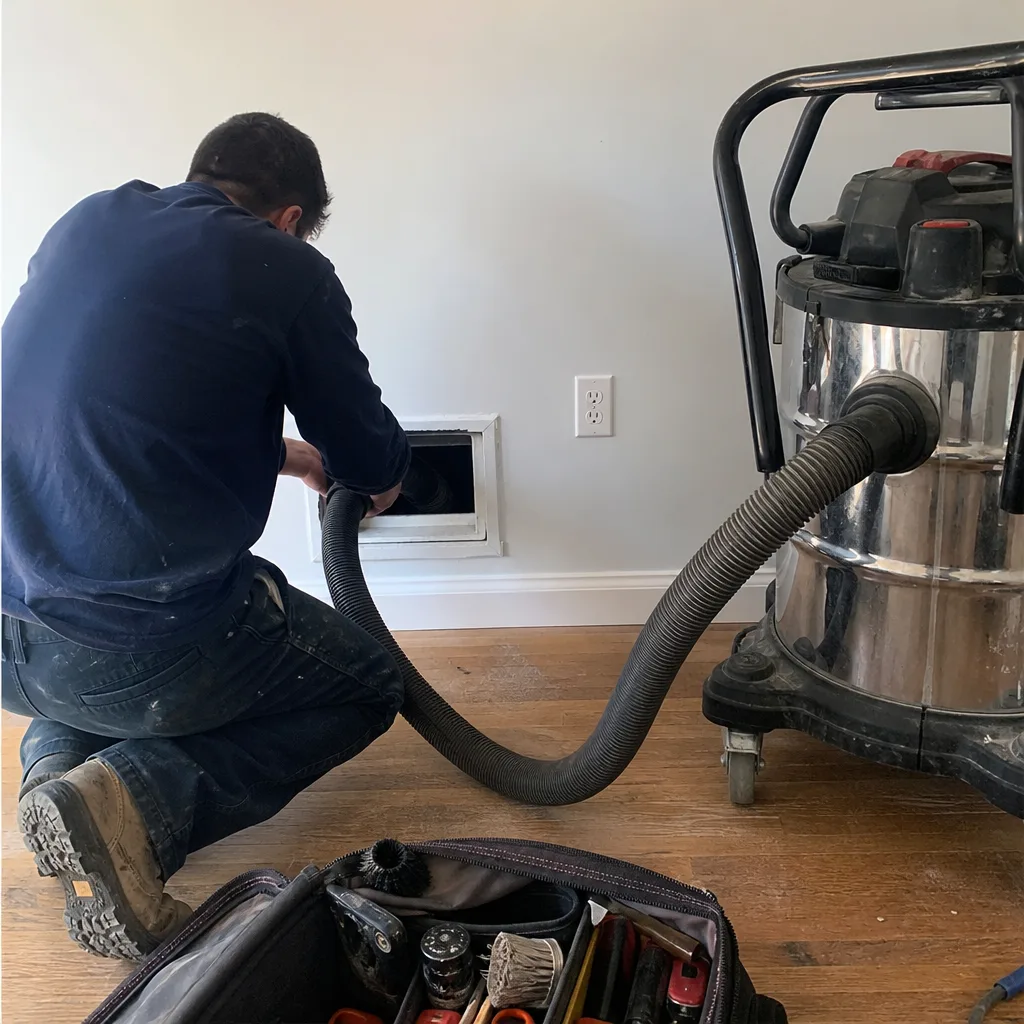
The first is register and return grille cleaning. Every supply and return register in your home accumulates a felt-like layer of dust, pet hair, and cooking residue within a few months. This buildup sits between your living space and the ductwork, meaning removing it delivers immediate, visible results. A damp microfiber cloth, warm water with a drop of dish soap, and a screwdriver to remove the register cover is all it takes. Do this every two to three months during heating season, when Yonkers homes run their furnaces constantly and static electricity makes dust cling harder.
The second is filter replacement, which is arguably the single highest-impact maintenance task any homeowner can perform. A clogged filter doesn’t just restrict airflow; it forces your blower motor to work against resistance, which shortens its lifespan and raises your Con Ed bill during July and August when Yonkers humidity peaks. Most HVAC systems in Westchester County homes use standard 1-inch filters, but some newer condos along the Yonkers waterfront use 4-inch media filters. Check monthly during heating and cooling season, replace or clean according to the manufacturer’s schedule, and write the installation date on the filter frame with a permanent marker so you’re not guessing later.
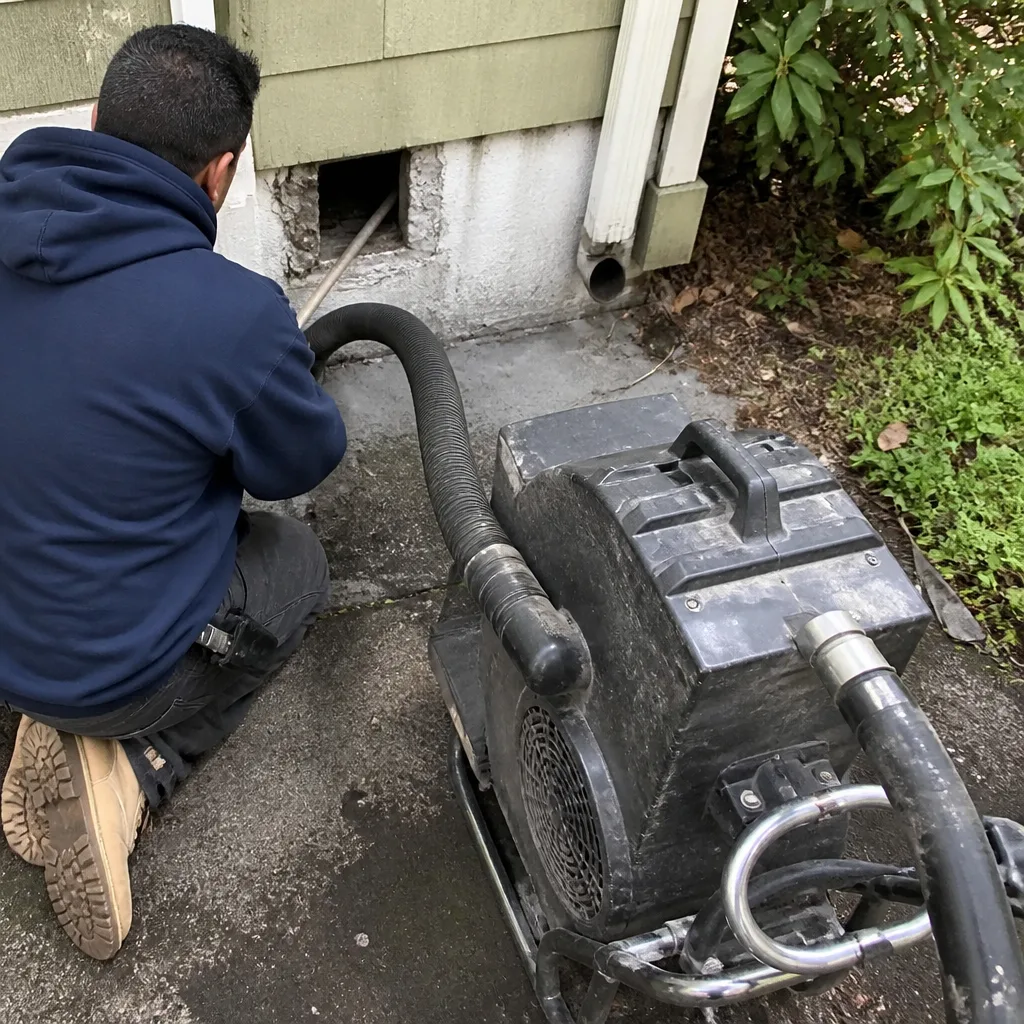
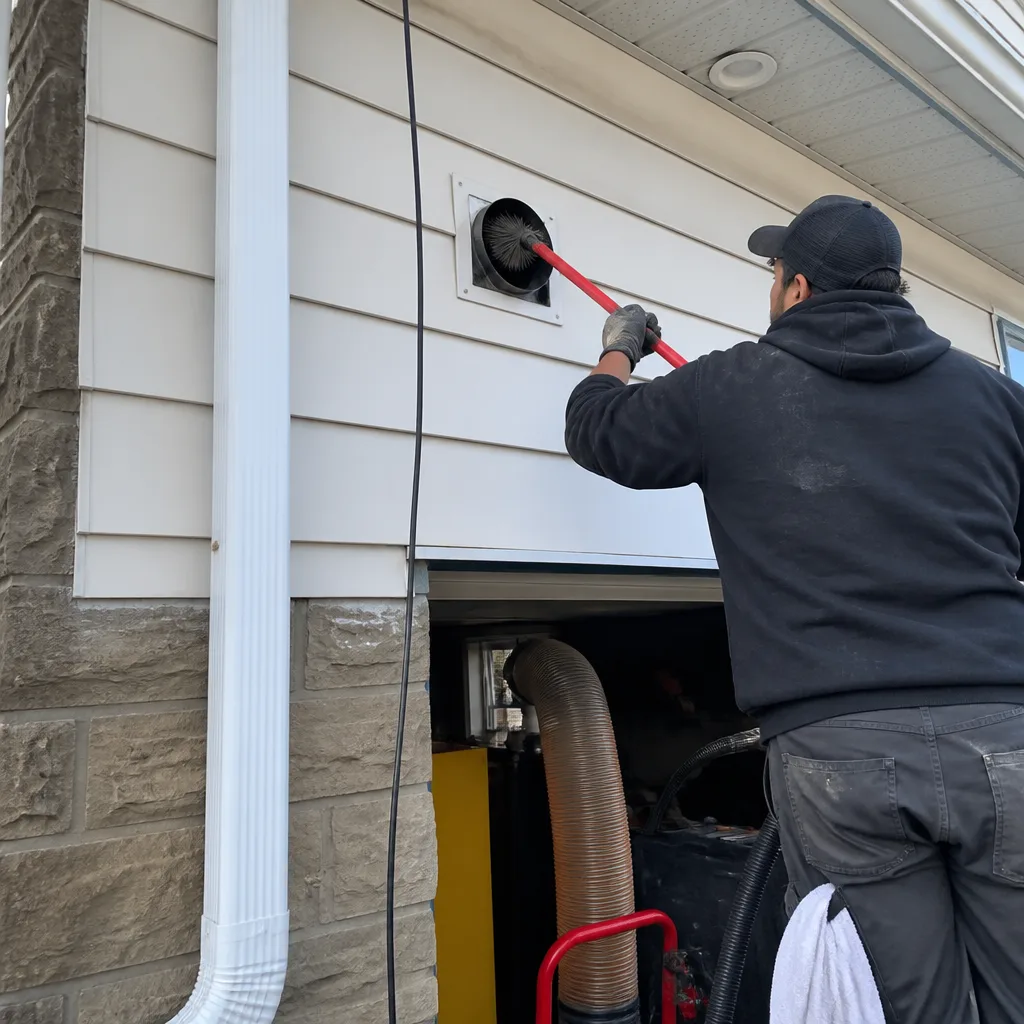
The third is dryer vent brushing on short, straight runs. If your dryer sits against an exterior wall and the vent run is under 15 feet with no elbows, a dryer vent brush kit from any hardware store works well. Disconnect the dryer, push the brush through from the interior side, and vacuum the exterior termination point from outside. We recommend this dryer vent cleaning in Yonkers approach for townhouse and ranch-style homes where the laundry room shares a wall with the outdoors. The lint you pull out is combustible material, and removing it reduces fire risk while improving drying efficiency.
These three tasks share a common trait: you can see and reach the surface being cleaned. The DIY boundary isn’t about skill, it’s about access. When the surface moves beyond arm’s reach or line of sight, consumer tools stop being effective and start being a liability.
The Physics of Why Consumer Vacuums Fail
The reason professional air duct cleaning in Yonkers uses different equipment than what’s in your hall closet comes down to one number: CFM, or cubic feet per minute. This measures how much air a vacuum moves, and it matters more than suction power, more than hose diameter, more than any other spec on the box.
A high-end consumer shop vac, the Ridgid or Craftsman models Yonkers homeowners have in their garages, pulls between 100 and 150 CFM through a standard 2.5-inch hose. That’s genuinely impressive for picking up sawdust or draining a flooded basement. But a residential duct system is a network of sealed tubes ranging from 4-inch round branches to 24×8 inch trunk lines, and the total volume of air inside a typical Yonkers split-level system is hundreds of cubic feet. A shop vac connected to one register pulls air only from that immediate branch; it has no ability to create negative pressure across the whole system.
The professional standard is different. Nikro portable HEPA units, the ones we run on every job, move between 2,000 and 4,500 CFM depending on configuration. That’s 15 to 30 times the airflow of a consumer vacuum. The distinction matters because duct cleaning is fundamentally about particle suspension and capture: you need enough airflow velocity inside the duct to lift debris off the metal surface, and enough suction at the collection point to capture everything that comes loose. A consumer vacuum achieves the first part in a small area but fails at the second, which means debris gets knocked free into the airstream and then settles somewhere else in the system.
Rotobrush brush systems paired with negative-pressure extraction solve this. The rotating brush scrubs the duct walls mechanically, while the Nikro unit pulls continuously from a single access point, keeping the entire system under negative pressure the whole time. Nothing that comes loose can drift back into your living room because the airflow only moves one direction: toward the collection point, not outward through your registers.
The Three Conditions That Make DIY Harmful
There are situations where attempting DIY duct cleaning doesn’t just fail to help; it actively makes things worse. These three conditions are common enough in Yonkers housing stock that we see at least one of them in roughly a third of the homes we service.
Flex Duct Systems
Many Yonkers homes built or renovated since the 1980s use flexible ductwork rather than rigid sheet metal. Flex duct is essentially a wire coil wrapped in plastic and insulation, and it’s significantly more fragile than the galvanized steel trunks in older homes. The wire coil is spiraled, which creates thousands of small ridges inside the duct where debris lodges. A DIY brush pushed through flex duct snags on these ridges, tears the inner liner, and can separate the duct from its connection at the plenum. Once torn, the only fix is replacement, which is a far larger expense than a professional cleaning would have been. We use low-torque rotary agitation with controlled brush pressure specifically designed for flex duct, and even then, our technicians inspect the entire run with a camera before agitating anything.
Suspected Mold
If you’ve seen dark staining around register openings, smelled a persistent musty odor that gets stronger when the system runs, or had water intrusion near your air handler, mold is a possibility. The worst thing you can do is disturb it with a consumer vacuum. Household vacuums without HEPA filtration will take mold spores concentrated inside the ductwork and aerosolize them throughout your home, turning a localized problem into a whole-house exposure. Professional HVAC cleaning in Yonkers approaches suspected mold differently: we inspect with a borescope first, use Abatement Technologies containment units to isolate the work area, and run HEPA-filtered negative air machines so nothing escapes the containment zone. If mold is confirmed, cleaning alone isn’t the fix; the source of the moisture has to be identified and corrected, otherwise it returns within one season.
Systems Unchanged for 5+ Years
Duct systems that haven’t been cleaned in five years or longer develop what we call compacted loading: a dense mat of debris that’s been pressed into place by years of airflow cycles. This material doesn’t vacuum up easily; it requires mechanical agitation to break the bond between debris and duct surface before extraction can work. Attempting to vacuum a heavy-loaded system with consumer equipment removes the loose top layer while leaving the compacted base intact, and the disturbance often dislodges large clumps that fall down into branch lines and block airflow entirely. We see this most often in Yonkers homes where previous owners deferred duct maintenance for a decade or more, particularly in the brick apartment buildings along South Broadway and the older single-family homes in the Crestwood and Bryn Mawr neighborhoods.
The Yonkers Decision Flowchart: Five Questions
Answer these five questions about your home honestly, and the right approach becomes clear. We’ve deliberately made each question binary, because most Yonkers homeowners know the answer without needing an inspection.
- Is your ductwork rigid sheet metal, and is it mostly visible in the basement or attic? If yes, continue. If you have flex duct or your ducts are enclosed behind finished walls, skip to question five; DIY is not appropriate for you.
- Has your system been professionally cleaned within the last five years? If yes, you’re in maintenance territory and DIY surface tasks are appropriate. If no, you’re dealing with compacted loading and need professional equipment to break the material bond before extraction.
- Is your dryer vent run under 15 feet with one elbow or fewer? If yes, DIY brushing on that specific vent is effective and safe. If your vent runs through the wall, up through the roof, or across a basement ceiling for more than 15 feet, professional dryer vent cleaning in Yonkers is required.
- Do you see any dark staining, moisture, or suspect mold anywhere in your system? If yes, stop. Do not disturb anything. Call a professional for inspection before any cleaning happens. If no, continue to the final question.
- Are you willing to spend 4 – 6 hours on DIY duct maintenance, including equipment purchase, setup, and cleanup? If yes, and your answers above put you on the DIY path, proceed with the tasks described in this guide. If the time commitment outweighs the savings, professional service is the better trade-off.
The flowchart output is deliberately simple: if you answered yes to questions one through three and no to question four, you’re a DIY candidate for the surface-level tasks only. If you answered no to any of the first three, or yes to question four, hire a professional for the whole-system work. Partial DIY with pro finishing, meaning you handle registers and filters while a pro handles the trunk lines and blower, is a valid middle path for homeowners whose systems have been professionally cleaned recently but need a deeper refresh.
Honest Cost Comparison: DIY vs Professional in Yonkers
The DIY case looks attractive on paper until you itemize the hidden costs. Here’s what each path actually costs for a typical three-bedroom Yonkers home with 12 – 15 registers and a standard sheet metal duct system.
DIY Full Attempt (Surface + Partial System)
- Shop vac: $80 – $150 (if you don’t already own one)
- Duct brush kit with extension rods: $35 – $60
- Dryer vent brush kit: $25 – $40
- Replacement filters (two-pack, standard 1-inch): $15 – $30
- HEPA filter upgrade for vacuum: $40 – $90 (without this, you’re recirculating debris)
- Time: 4 – 6 hours of your weekend
- Realistic DIY total: $200 – $370 and a full day of work, with no whole-system cleaning accomplished
Professional Whole-System Cleaning
For a standard Yonkers single-family home, most professional air duct cleanings run $450 – $750 for the complete system, including trunk lines, branch ducts, return drops, plenum, blower assembly, and register reinstallation. That’s the honest range you should budget for with any reputable company serving Westchester County. The price varies by system size, number of returns, accessibility of the air handler, and whether you add dryer vent service or HVAC cleaning in Yonkers components like the evaporator coil.
What the professional price includes that DIY cannot replicate: negative-pressure containment throughout the cleaning process, mechanical agitation of compacted debris, camera inspection before and after, and documentation of exactly what was removed. At Cardinal Air Duct Yonkers, every job also includes a written price before any work starts, so the quote you approve is the amount you pay. We don’t adjust pricing once the technician is inside, which matters in this industry where bait pricing is common.
The honest math: DIY saves $250 – $400 on the surface, but it doesn’t clean the system. If your goal is visible surface maintenance, DIY is the right call. If your goal is a clean duct system, the professional price is the actual cost of getting that outcome, and the DIY money spent on partial attempts is simply a down payment on frustration.
What Professional Cleaning Actually Involves
Understanding what a professional service does helps clarify why the equipment cost and price point differ so dramatically from consumer tools. Here’s the sequence, step by step, as it happens in a typical Yonkers home.
- Pre-inspection with camera: The technician runs a borescope through the supply and return trunks to identify blockages, moisture, mold indications, and the type of ductwork present. This step determines what agitation method is safe for your system.
- Filter and register removal: All registers, return grilles, and the system filter are removed and either cleaned or marked for replacement. Registers get washed and reinstalled at the end of the job.
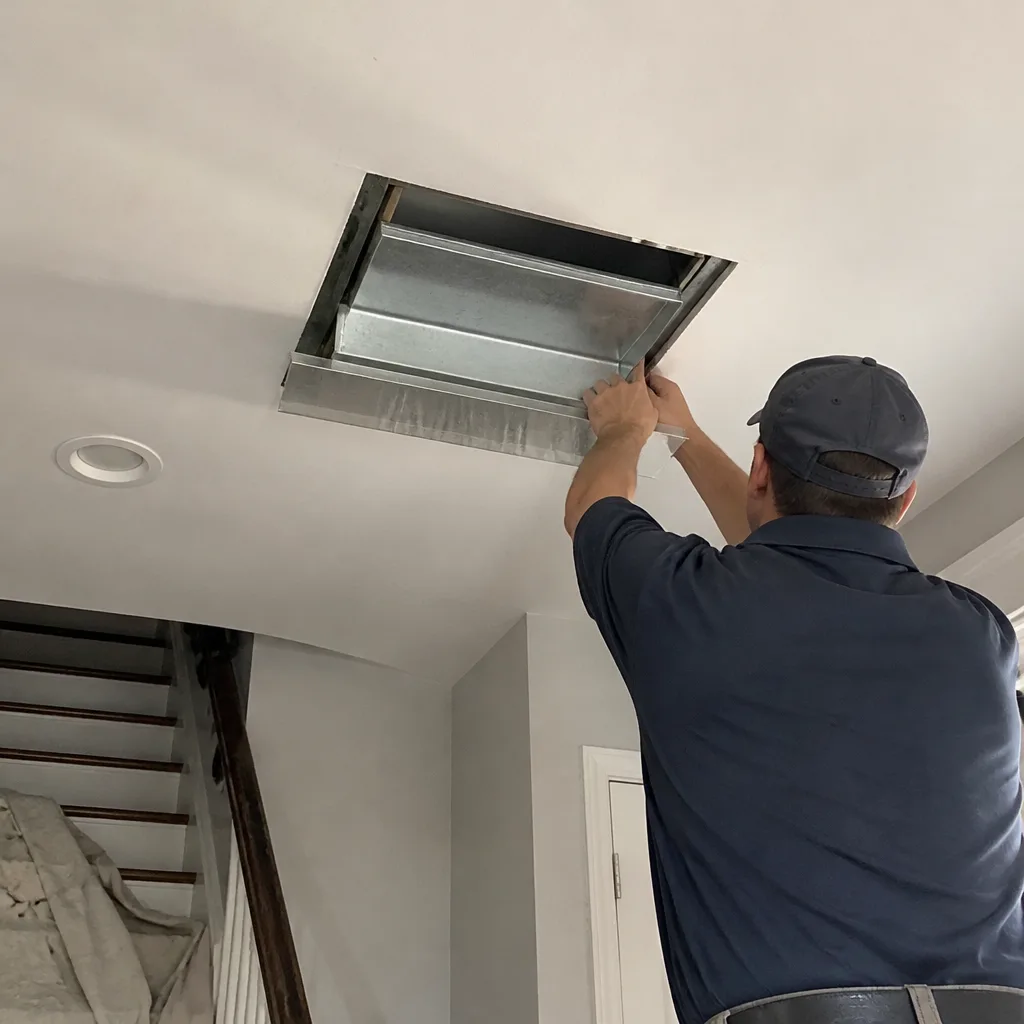
- System sealing: Supply registers are sealed off, and an access point is cut into the supply plenum or trunk line. The vacuum unit connects at this point, placing the entire system under negative pressure.
- Mechanical agitation: A Rotobrush rotary brush or air whip is inserted through each branch and trunk, scrubbing the interior surfaces while the Nikro HEPA vacuum continuously extracts dislodged material. The negative pressure ensures debris flows toward the collection unit, never back into your home.
- Return side cleaning: The return side is cleaned separately, often requiring a second access point, because return ducts carry unfiltered air and typically hold the heaviest debris load. In many Yonkers homes, return drops are hidden inside wall cavities, which is why professional access techniques matter.
- Blower and plenum cleaning: The blower wheel, housing, and plenum are vacuumed and wiped down. A fouled blower wheel can throw particles into the airstream forever, so this step is non-negotiable for a complete job.
- Post-inspection: The camera goes back through the system, and you see the before-and-after difference in the same duct runs. At Cardinal, we document this with photos and include them in your digital invoice, which you can review and pay from your phone.
- System reassembly: Registers are reinstalled, a fresh filter goes in, the access points are sealed with caps designed for re-access, and the work area is left clean.
This eight-step process takes four to eight hours depending on system size and complexity. The single-family homes in Yonkers’ Park Hill and Ludlow neighborhoods with full basements and exposed ductwork are the fastest jobs. Condos and co-ops along the Hudson River corridor, where mechanical rooms are tight and access is restricted by building rules, take longer. The Cardinal Air Duct Yonkers crew handles both equally, but building access requirements in condo buildings sometimes require coordination with management, which adds scheduling time rather than labor time.
Common Mistakes to Avoid
- Vacuuming registers with a household vacuum and calling it duct cleaning. You’ve cleaned the register face, not the duct. The debris inside the duct remains untouched, and your vacuum’s exhaust is blowing fine particles back into the room unless it has a true HEPA filter.
- Using a leaf blower to “blow out” the ducts. This pressurizes the system and forces debris through every register opening into your living space. We’ve repaired the aftermath of this approach in Yonkers homes, and the cleanup cost exceeds what a proper cleaning would have been.
- Buying “duct cleaning tablets” or foggers sold online. There is no chemical product that cleans duct surfaces by being placed in the airstream. These products are, at best, ineffective air fresheners, and at worst, they add chemical residue to the surfaces you’re trying to clean.
- Ignoring the return side. Homeowners often focus on the supply registers they can see, but return ducts pull unfiltered air and accumulate more debris than supply lines in most Yonkers homes. If you’re cleaning anything, returns matter most.
- Attempting to remove and deep-clean a blower wheel yourself. The blower is balanced, wired, and sealed within the air handler. Removing it without the right tools and knowledge can throw off balance, damage bearings, or create electrical hazards. This is always a professional task.
- Assuming a clean filter equals clean ducts. The filter protects the equipment, not the ductwork. Air bypasses the filter continuously through gaps, and anything that got past the filter in previous years is still inside the ducts. Filter maintenance and duct cleaning are complementary, not interchangeable.
- Trusting a $99 whole-house duct cleaning coupon you found online. This is the classic bait price in our industry. The technician arrives, sets up equipment, then announces “additional charges” for each return, each branch, sanitizing, or “mold treatment.” The final invoice lands at $900 – $1,400. At Cardinal Air Duct Yonkers, your written price before work starts is the price on the invoice, period.
When to Call a Professional
You should call a professional when any of these conditions apply: you have flex duct, you suspect mold, your system hasn’t been cleaned in five or more years, your dryer vent runs over 15 feet or has multiple elbows, you’ve recently completed a renovation that generated drywall or construction dust, or you’ve moved into a home with no duct maintenance history. Each of these situations requires equipment and techniques that consumer tools cannot replicate. Cardinal Air Duct Yonkers offers free estimates in Yonkers – call (914) 613-6563 and a live person answers, not a voicemail loop. You’ll get an honest assessment of whether your system needs professional work now or whether DIY maintenance is genuinely sufficient for your situation.
Frequently Asked Questions
Professional air duct cleaning in Yonkers typically runs $450 – $750 for a standard single-family home with 12 – 15 registers and exposed sheet metal ductwork. The range varies by system size, number of returns, and accessibility of the air handler. Condo and co-op units in Yonkers often fall on the lower end of that range due to smaller systems. Call (914) 613-6563 for an exact quote for your specific home; estimates are free and the written price you approve is the price you pay.
DIY is safe and effective for three specific tasks: register and grille cleaning, filter replacement, and dryer vent brushing on straight runs under 15 feet with no elbows. These tasks address accessible surfaces and deliver genuine improvements in airflow and air quality. Whole-system cleaning requires professional negative-pressure equipment, and attempting it with consumer vacuums on systems older than five years can dislodge debris without capturing it, potentially making the problem worse.
The $99 quote is a bait price. Duct cleaning equipment, labor, and proper containment cannot be delivered for $99, so companies offering that price intend to upsell aggressively once the technician is inside your Yonkers home. The final invoice typically lands between $900 and $1,400 with invented charges for additional returns, branch lines, sanitizing, or “mold treatment.” Reputable companies quote the honest whole-system price upfront, which for a standard Yonkers home is $450 – $750. The question to ask any company is simple: “Is this the final price for the whole system, in writing?”
Ask for before-and-after photos of the same duct runs, taken with a borescope camera from inside the system. Any professional company should provide this documentation. At Cardinal Air Duct Yonkers, we include photo documentation with every job as part of The Relay Standard: you see the same duct before and after, with the debris that was extracted. A company that refuses photo evidence is a red flag.
For most Yonkers homes, professional duct cleaning every 3 – 5 years is appropriate. Homes with shedding pets, recent renovations, smokers, or residents with respiratory conditions may benefit from more frequent service, in the 2 – 3 year range. If you change filters regularly and clean registers between professional visits, you can safely stretch toward the longer end of that window. Homes with flex duct or older systems that have never been cleaned should schedule an initial professional cleaning sooner rather than later.
Yes, if your dryer sits against an exterior wall and the vent run is under 15 feet with one elbow or fewer, a $25 – $40 dryer vent brush kit does the job effectively. Disconnect the dryer, brush from the interior side, and vacuum the exterior termination point from outside. If your vent runs through the interior, up through the roof, or over 15 feet, hire a professional. Lint in inaccessible vent runs is a fire hazard, and Yonkers fire code requires maintaining clear dryer exhaust. Call (914) 613-6563 for a free dryer vent assessment.
The Bottom Line
The DIY vs. professional question isn’t about effort or pride; it’s about physics and access. Yonkers homeowners can and should handle surface-level maintenance: registers, filters, and short straight dryer vents. These tasks produce real benefits and reduce the frequency of professional service. But the moment the task moves beyond visible, reachable surfaces into the sealed network of supply trunks, branch lines, returns, and the blower assembly, consumer tools physically cannot move enough air to clean properly, and the attempt risks making things worse. When in doubt, get an honest assessment before spending money on equipment that won’t solve the problem.
Call Cardinal Air Duct Yonkers at (914) 613-6563 for a free estimate with no obligation. You’ll get a written price before any work starts, before-and-after photos of your own ducts, and the 365-Day Done Right Promise: if the work isn’t right within 365 days, we return and correct it at no charge. That’s the standard in Yonkers now.
Written by Omar Haddad, Owner at Cardinal Air Duct Yonkers, serving Yonkers since 2005.
See the difference
 Before
 After
After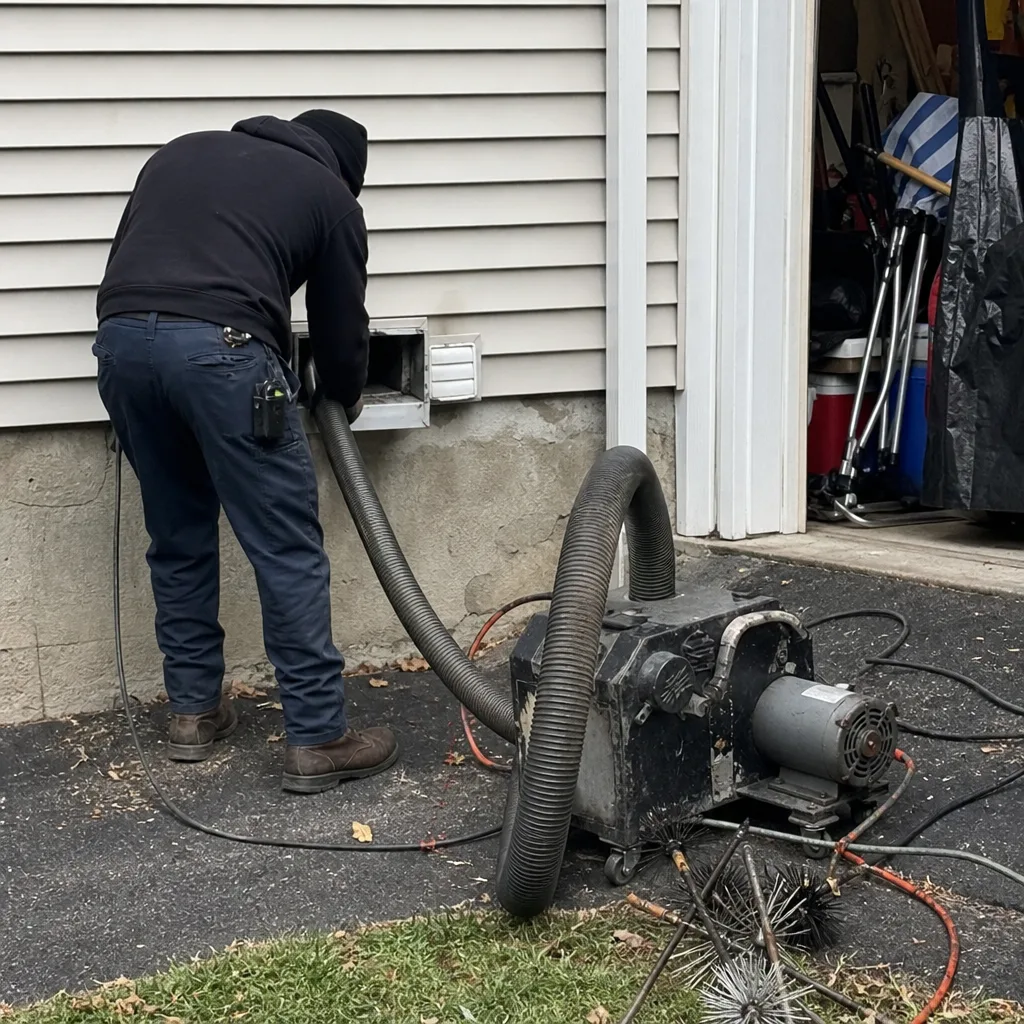 Before
 After
After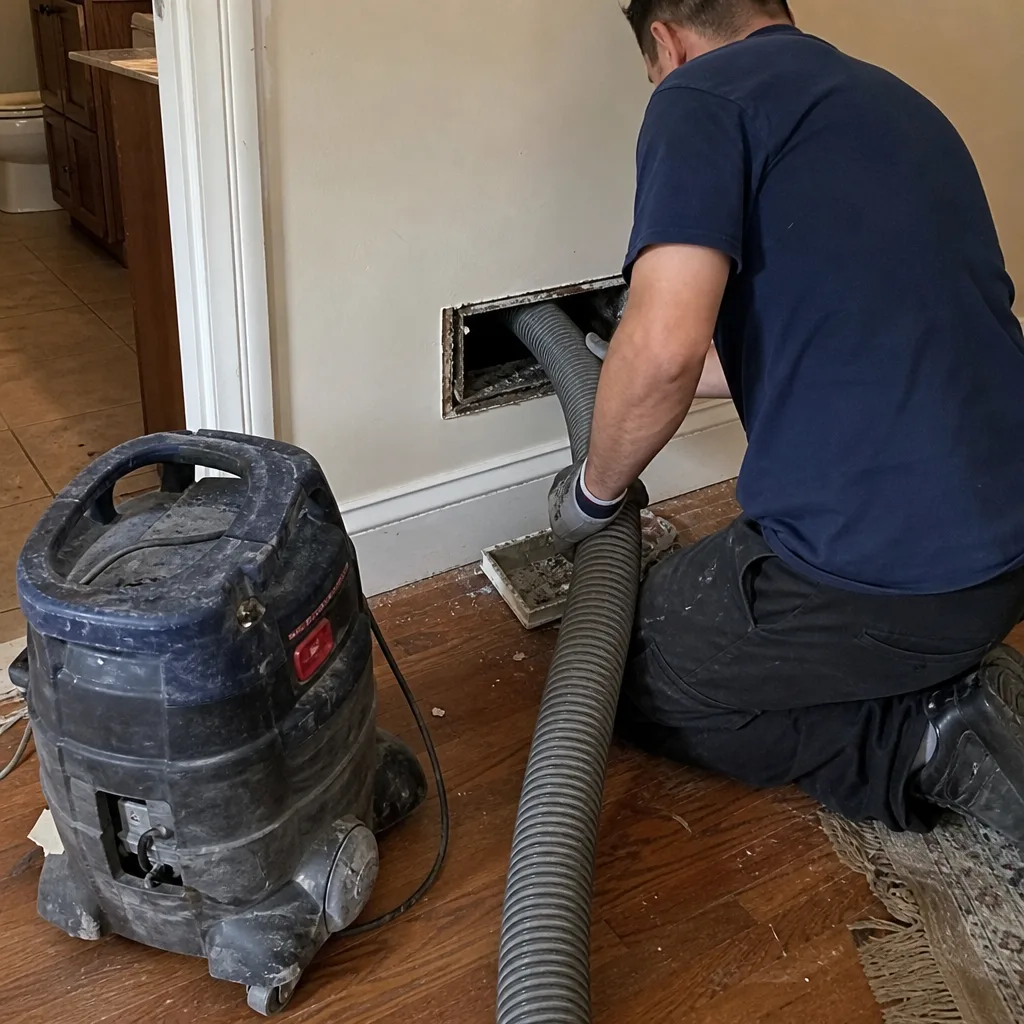 Before
 After
After