
Last updated October 15, 2026
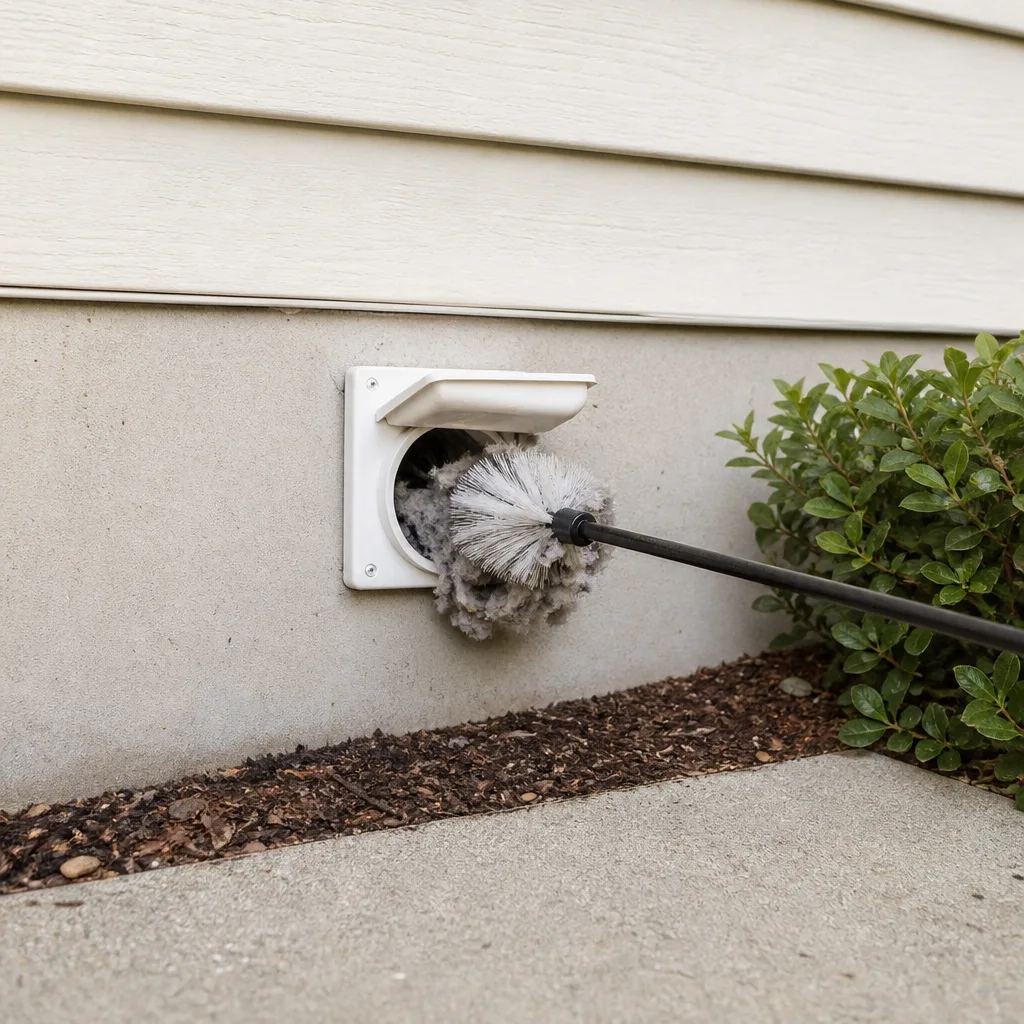 Dryer vent cleaning
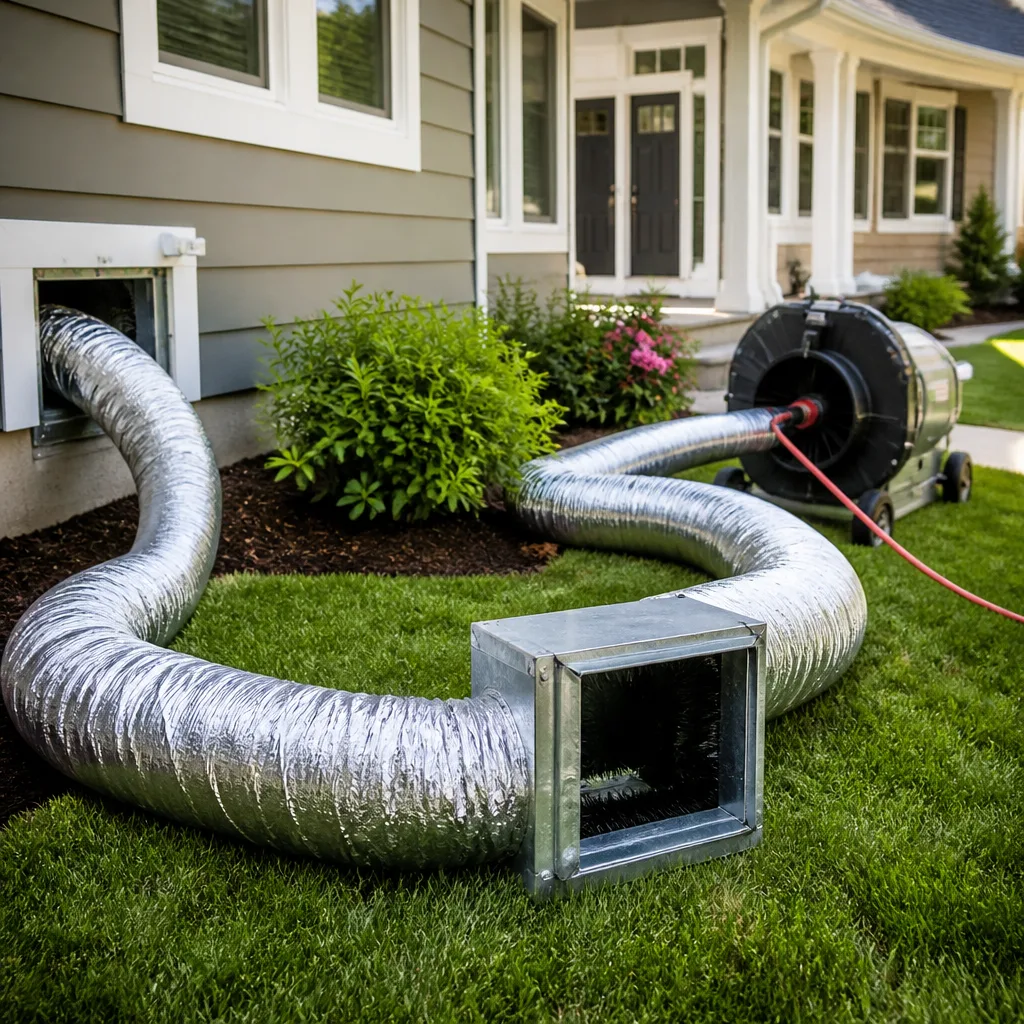 Whole-home duct cleaning
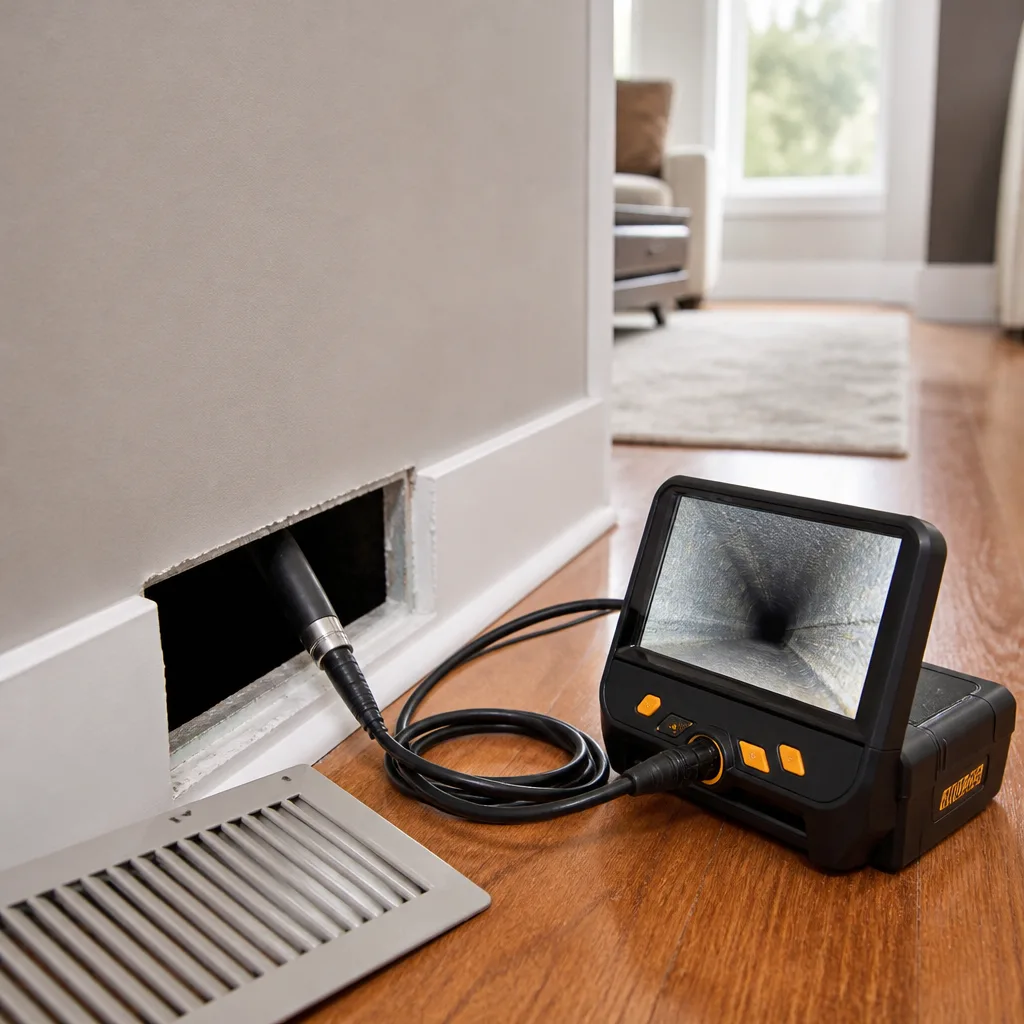 Camera inspection
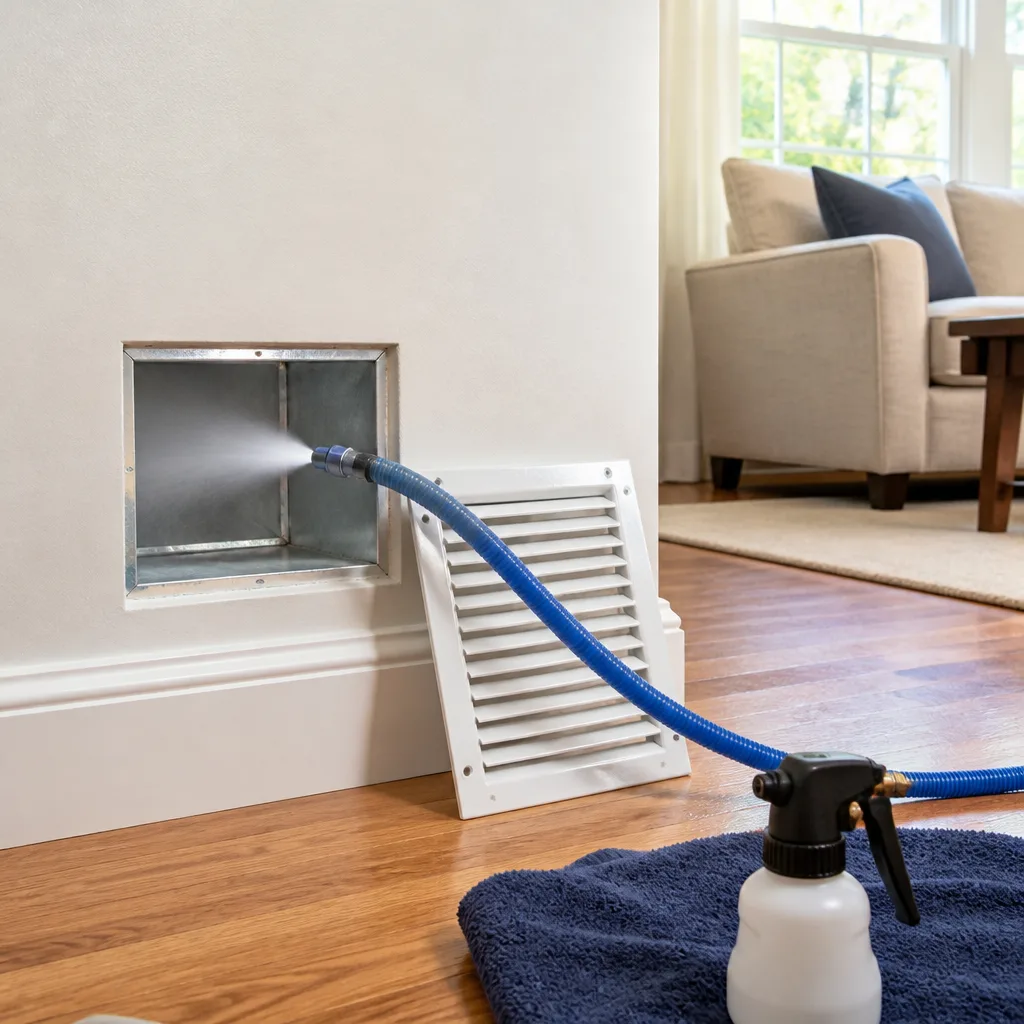 Sanitizing & deodorizing
Whole-system duct and dryer vent check with before-and-after photos - you see exactly what came out of your vents
That "$99 whole-house special" is a bait ad - the real number appears once they are in your hallway, or the "clean" is a shop-vac at the register. We photograph the inside of your ducts before and after instead.
Dryer Vent Cleaning Maintenance Checklist for Yonkers Homeowners
The U.S. Fire Administration links roughly 2,900 dryer fires a year to failure to clean the vent. But the number that matters more in Yonkers is this: duct runs longer than 25 feet, which we see constantly in the multi-story homes and attached row houses across the city, can lose up to half their lint-trap efficiency. That means your dryer can look fine on the outside while the vent behind the wall is quietly turning into a fire hazard. This checklist, alongside Seasonal Air Duct Cleaning Care for Yonkers: Year-Round Homeowner’s Guide, walks you through the physical inspection steps month by month, so you catch dangerous buildup before it becomes an emergency call.
Quick Answer
A dryer vent maintenance checklist for Yonkers homeowners comes down to a monthly exterior-vent airflow check, a quarterly look at the duct run itself if any of it is visible, and our Dryer Vent Cleaning services with a rotary brush and HEPA vacuum every 12 to 18 months, more often if your vent run is longer than 25 feet or has more than two elbows. Homes with longer, bent runs, extremely common in Yonkers apartments and attached houses, need professional attention closer to every 12 months because lint traps at every elbow. The single most important DIY step is checking the outside vent hood while the dryer is running, a strong steady airflow should move the flap open and keep it open.
Styles & brands we work with
Table of Contents
- Signs Your Dryer Vent Needs Cleaning Right Now
- The Monthly Checklist: What to Check Yourself
- The Quarterly Checklist: Deeper Inspection Steps
- How to Measure Your Vent Run and Count Elbows
- How Often Should Yonkers Homeowners Really Clean Their Dryer Vents?
- What a Professional Dryer Vent Cleaning Looks Like Step by Step
- Red Flags That a Previous Cleaner Cut Corners
- Common Mistakes to Avoid
- When to Call a Professional
- Frequently Asked Questions
Signs Your Dryer Vent Needs Cleaning Right Now
Most Yonkers homeowners don’t realize their dryer vent is clogged until the dryer starts acting up. By then, you’ve already spent weeks or months running a machine that’s working twice as hard as it should. Here are the signals we tell every customer to watch for, and the reason each one matters.
- Clothes take more than one full cycle to dry. A dryer in good condition with a clear vent should dry a normal load in 45 to 50 minutes. If you’re running it twice, lint buildup is almost always the culprit, and every extra cycle adds heat and strain to the system.
- The outside vent flap doesn’t open when the dryer runs. Walk outside while the dryer is on. The vent hood flap should be pushed open by the airflow. If it stays closed or only flutters weakly, the air is backing up somewhere in the run.
- The laundry room gets hot or humid during a cycle. That heat has to go somewhere. If the vent can’t exhaust it, it escapes into your living space, which is both uncomfortable and a sign the system is failing.
- You smell a burning or musty odor when the dryer is running. Lint is combustible. When it builds up near the heating element or in the vent run, it can smolder. A musty smell often means trapped moisture is encouraging mold inside the duct.
- The dryer feels unusually hot to the touch on the outside. Some warmth is normal. A surface that feels hot enough to be uncomfortable means heat is not escaping the way it should.
- It’s been more than a year since the last professional cleaning. Even if everything seems fine, lint accumulates silently. The U.S. Fire Administration’s 2,900 annual dryer fires are not all from neglected machines, many are from vents that looked fine from the outside.
If any of these sound familiar, the fix is not a DIY attempt with a leaf blower or a shop vac. Those approaches leave the compacted lint deeper in the run untouched. Our Dryer Vent Cleaning in Yonkers service uses a rotary brush system to break the buildup loose and a HEPA-rated vacuum to pull it out, which we’ll describe in detail later in this guide.
The Monthly Checklist: What to Check Yourself
A monthly dryer vent check takes about five minutes. It is the single most effective habit a Yonkers homeowner can build, and it catches problems while they’re still cheap to fix. Here is the routine we recommend, in order.
- Run the dryer and walk outside to the vent hood. The flap should be fully open, with air pushing out firmly. On a cold day you should see a steady plume of moist air. Weak flow means something is restricting the run.
- Check the lint trap. Pull it out and hold it under running water. If water pools on the screen instead of passing through, there’s a film of dryer-sheet residue blocking airflow. Wash it with warm water and a drop of dish soap, let it dry completely, and put it back. Do this even if you clean the lint trap after every load.
- Look behind the dryer. Make sure the flexible transition hose, the short section connecting the dryer to the wall, is not kinked, crushed, or sagging. A sagging hose collects lint at the low point and can halve your airflow.
- Listen for rattling or thumping during the cycle. New noises can mean the dryer drum is struggling, often because it’s working against a clogged vent.
- Time one full drying cycle. If a normal load now takes noticeably longer than it did a few months ago, and you’ve cleaned the lint trap, the buildup is inside the vent run, not in the trap. Book a professional cleaning.
In our experience working across Yonkers, from the single-family homes in Crestwood to the apartments and attached houses in Getty Square and Park Hill, the monthly outside-flap check is the one step most people skip entirely. It’s also the one that catches problems earliest. Build it into a routine, like checking smoke detector batteries, same urgency, same five minutes.
The Quarterly Checklist: Deeper Inspection Steps
Every three months, go a little further. These steps take fifteen to twenty minutes and require no special tools, just a flashlight and a willingness to look at the parts of your home that normally go ignored.
- Inspect the entire visible length of the duct run. In many Yonkers basements and utility closets, at least part of the vent pipe is exposed. Shine a flashlight along it and look for disconnected joints, sagging sections, or gaps wrapped in duct tape. Duct tape dries out and fails, and a disconnected joint means lint is blowing into your wall cavity or ceiling, not outside.
- Check the vent hood on the outside of the house. Look for lint clinging to the flap or the surrounding siding. A visible lint beard around the vent hood means the exhaust is pushing lint out but not everything is clearing the opening, a sign of partial blockage just inside.
- Test the dryer’s pull on a tissue. With the dryer running, hold a tissue near the lint trap opening. It should be pulled toward the screen firmly. If the pull is weak, airflow is restricted.
- Look for moisture stains on the ceiling or walls along the vent path. In multi-story Yonkers homes with long vertical vent runs to the roof, condensation forms when airflow slows. Stains mean the warm, moist air is cooling and condensing inside the pipe, which points to a partial clog.
- Count the elbows and measure the run. This is the step that tells you whether the generic “once a year” advice applies to you or whether you need professional cleaning more often. We cover the math in the next section.
These quarterly checks are not meant to replace a professional cleaning. They exist to give you a baseline, so when something changes, you notice it immediately. We’ve had Yonkers customers catch a disconnected joint during a quarterly look that would have dumped lint into a wall cavity for months before any symptom appeared.
How to Measure Your Vent Run and Count Elbows
Here is the calculation that every Yonkers homeowner should know, because it tells you how often you actually need professional cleaning, not the generic once-a-year advice that ignores your house’s specific layout.
First, measure the total length of the vent run from the back of the dryer to the termination point outside. Use a measuring tape for exposed sections. For hidden sections inside walls or ceilings, estimate based on the distance between the point where the duct enters the wall and where it exits the house. In a two-story Yonkers home with a laundry room in the basement, that run can easily be 30 to 40 feet.
Next, count every elbow. Each 90-degree elbow adds the equivalent of 5 feet of straight pipe to your effective run length. A 45-degree elbow adds 2.5 feet. So a 25-foot run with three 90-degree elbows has an effective length of 40 feet.
Now compare that number against your dryer’s installation manual. Most manufacturers list a maximum equivalent duct length, commonly 25 to 35 feet. Every foot beyond that maximum reduces airflow and increases lint accumulation. Here is the rule of thumb that follows:
- Effective run under 25 feet: Professional cleaning every 18 to 24 months is usually sufficient, assuming you do the monthly and quarterly checks.
- Effective run 25 to 35 feet: Professional cleaning every 12 months. Lint accumulates measurably faster once you cross the 25-foot mark.
- Effective run over 35 feet or more than three elbows: Professional cleaning every 6 to 12 months. These are the runs we see most often in Yonkers multi-story homes and attached houses with rooftop terminations, and they are the ones where the 2,900-fire statistic becomes personally relevant.
If your run exceeds the manufacturer’s maximum, the long-term fix is either relocating the dryer closer to an exterior wall, upgrading to a larger-diameter duct, or installing a booster fan. None of these are DIY projects. A professional can assess your specific layout and recommend the right fix. Understanding your run length and elbow count is the single biggest factor in your actual cleaning frequency. Use the real number for your house, not the generic advice that treats every home in Yonkers as identical.
How Often Should Yonkers Homeowners Really Clean Their Dryer Vents?
The honest answer is that it depends on four factors, and once you know them, you can stop guessing. The generic once-a-year advice is a decent starting point, but it’s not tailored to the way homes are built in Yonkers.
Factor one: the length and shape of your vent run. As covered above, longer runs and more elbows mean more frequent cleaning. A row house in Park Hill with a vent that travels horizontally through a shared wall chase has a different schedule than a single-family home in Crestwood with a short straight run through an exterior wall.
Factor two: how many people live in the home and how often you run the dryer. A family of five doing laundry daily will generate lint at a rate the USFA’s statistics don’t account for. A single person doing two loads a week will take far longer to fill the same run with lint.
Factor three: what you dry. Bath towels, pet bedding, and heavy cotton produce more lint than synthetic fabrics. Homes with large dogs, common in many Yonkers neighborhoods, and a steady stream of pet laundry should lean toward the more frequent end of the range.
Factor four: the age and condition of the dryer. Older machines often lack the sensors that detect airflow restriction, so they’ll keep running at reduced efficiency without ever alerting you. If your dryer is more than 10 years old, treat it as a machine that needs more frequent vent cleaning, not less.
Here is a simple reference table we give to customers:
| Effective Vent Length | Household Size | Recommended Cleaning Interval |
|---|---|---|
| Under 25 ft | 1-2 people | Every 18-24 months |
| Under 25 ft | 3+ people | Every 12-18 months |
| 25-35 ft | Any size | Every 12 months |
| Over 35 ft or 3+ elbows | Any size | Every 6-12 months |
Most standard dryer vent cleanings in Yonkers run $125 to $300 for a typical single-family home, depending on run length, access, and whether the termination is on a roof or upper wall. Longer runs and rooftop terminations run higher. The cost is modest compared to the alternative: a dryer fire, or the slow damage to your dryer from years of running against a clog. We offer a written price before any work begins, so you’ll know the exact cost before we touch your vent.
What a Professional Dryer Vent Cleaning Looks Like Step by Step
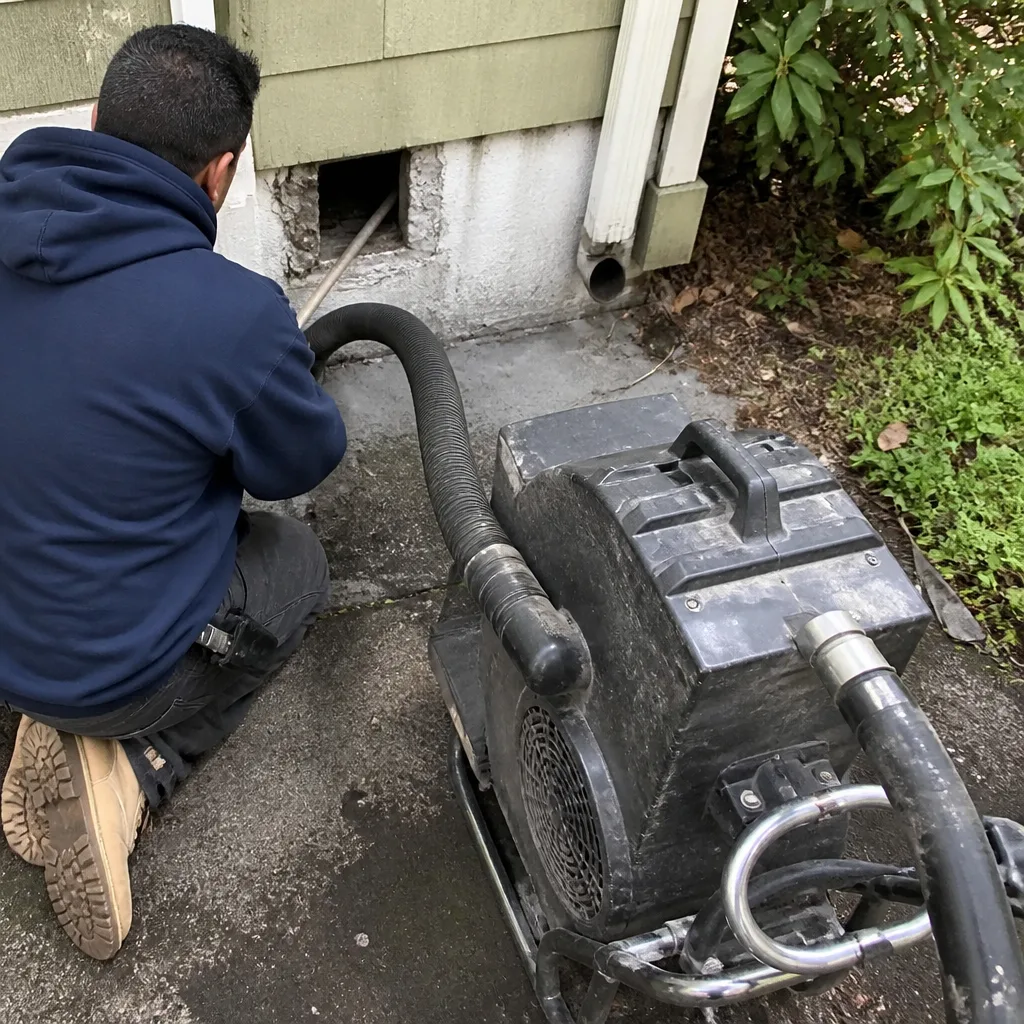
Here is exactly what happens during a professional dryer vent cleaning with our team, so you know what to expect and what to look for from any company you hire in Yonkers. We use a rotary brush system, specifically Rotobrush equipment, paired with a Nikro HEPA-rated negative-pressure vacuum. Negative-pressure extraction means the loosened debris goes straight into the vacuum, not back into your laundry room or living space.
- Pre-inspection and airflow reading. Before anything is cleaned, we measure the airflow at the vent termination. This gives us a baseline number. A healthy system should move a certain volume of air per minute, and a clogged run will be well below it. We also inspect the visible portions of the run and note any disconnected joints or damage.
- Disconnect the dryer and protect the area. We move the dryer carefully, disconnect the transition hose, and lay down protective covering on the floor. The vent opening is sealed off around our tools so that dust and lint cannot escape into your laundry room.
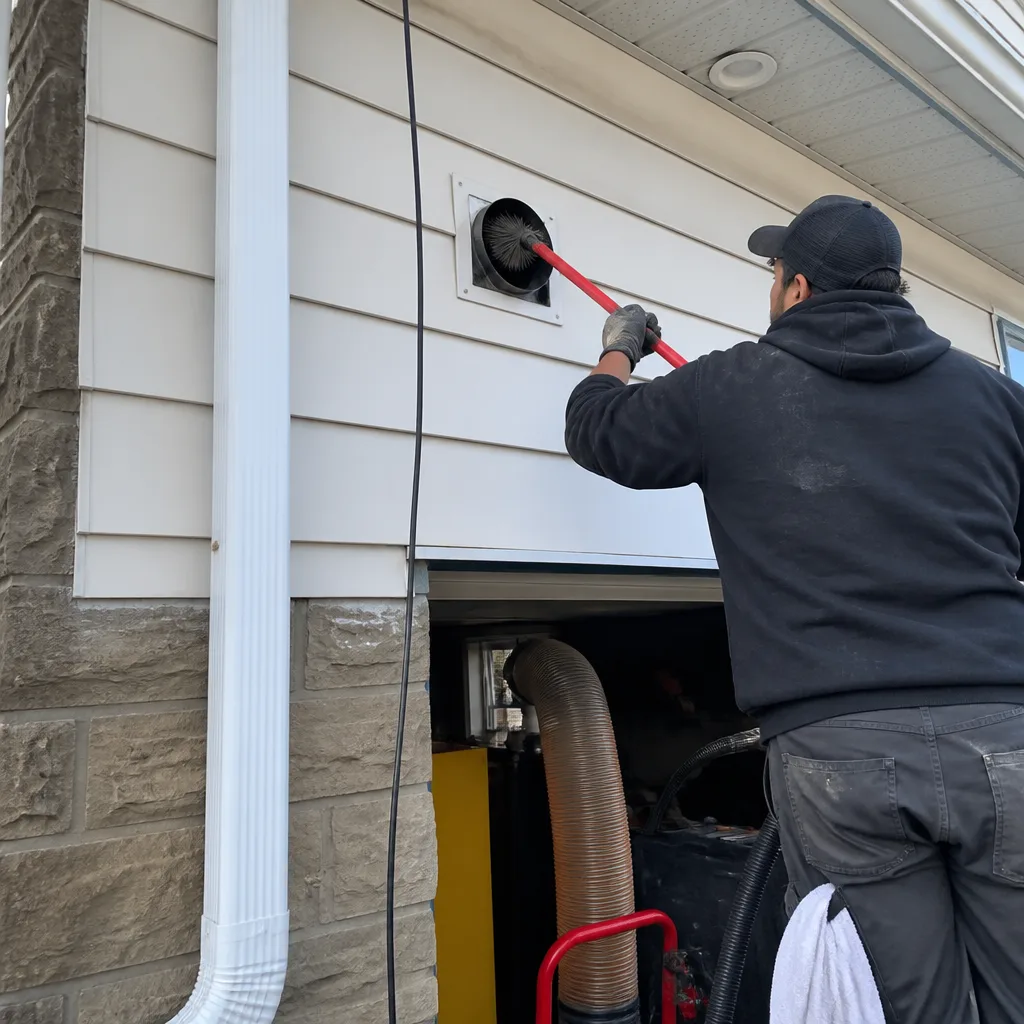
- Rotary brush pass. We feed a flexible shaft with a rotating brush head through the entire duct run, from the dryer connection all the way to the outside termination. The brush spins as it travels, breaking loose lint that has caked onto the duct walls, especially at elbows where buildup is worst. In Yonkers homes with long vertical runs, this can be the difference between a surface cleaning and actually clearing the pipe.
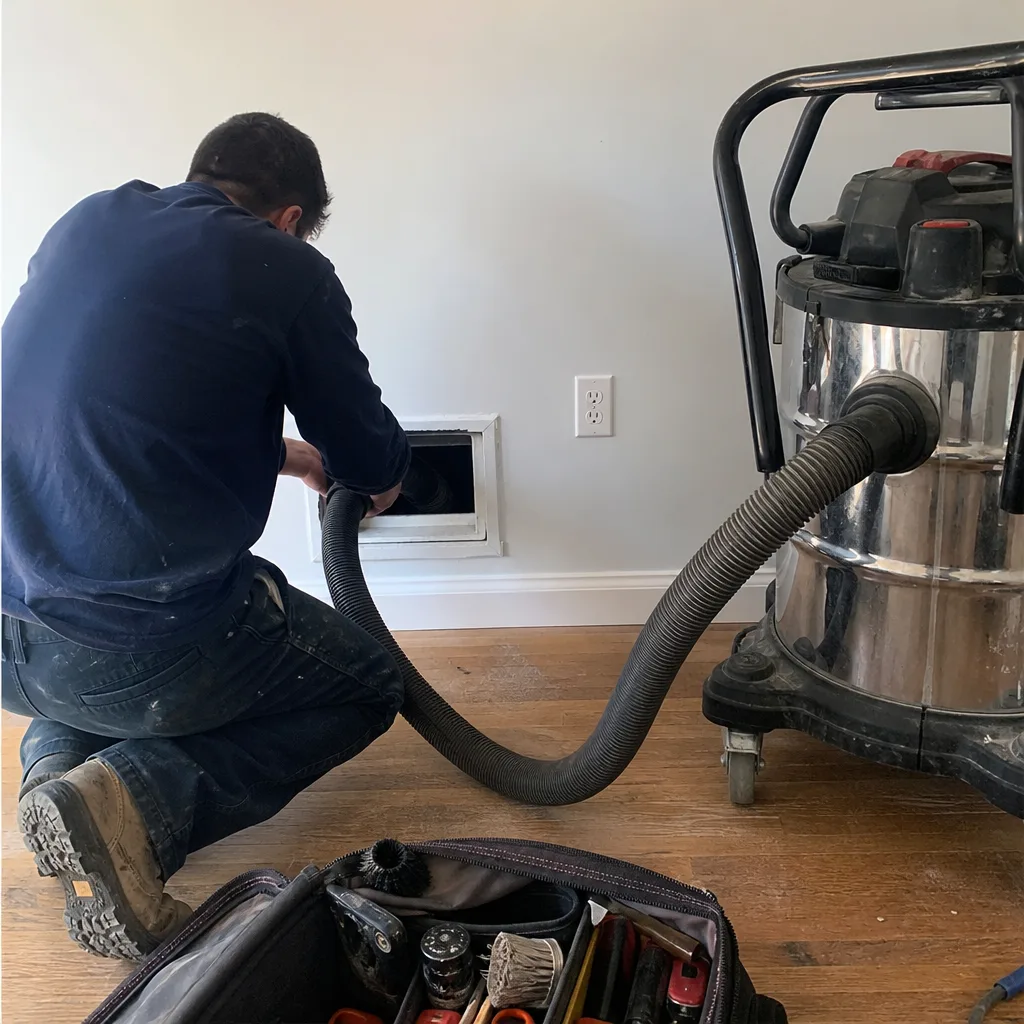
- HEPA vacuum extraction. Running simultaneously, the Nikro HEPA vacuum pulls the dislodged lint and debris out of the duct and into a sealed collection canister. Because the system maintains negative pressure in the duct during the entire pass, nothing escapes into your home. This is a major difference from a tech using a basic hose and hoping gravity helps.
- Post-cleaning airflow reading. After the brush and vacuum have done their work, we take another airflow reading at the vent termination. The before-and-after numbers should show a significant improvement. If they don’t, we know there’s a blockage we haven’t reached and we go back in. This step is part of our 365-Day Done Right Promise: if the work isn’t right within 365 days, we return and correct it at no charge.
- Before-and-after photo documentation. We photograph the duct interior at the start and finish, plus the exterior vent hood and the lint we removed. You get these photos as part of your record, which is especially useful if you ever need to show evidence of maintenance for insurance or a home sale.
- Reconnect and test. We reconnect the dryer, run it briefly to confirm proper airflow, and leave the laundry area clean. You receive a digital invoice payable by link.
This process follows The Relay Standard: a live trackable arrival time before we show up, before-and-after photo proof of the work, and a written price before any cleaning starts. If a company in Yonkers can’t describe their process in this level of detail, or refuses to give a price until after they’ve already started, that’s a signal to keep looking.
Red Flags That a Previous Cleaner Cut Corners
Not every dryer vent cleaning service in Yonkers uses the same equipment or the same standard of work. Some companies run a shop-vac hose into the vent and call it done. That approach pulls out loose surface lint but leaves the compacted buildup at the elbows and along the duct walls untouched. Here are the red flags that tell you a previous cleaner didn’t do the job properly, and most of them you can verify without any tools.
- The outside vent hood was never touched. If the lint at the exterior termination is still sitting there after the cleaning, the brush never reached that end of the run. A real cleaning passes all the way through to the outside.
- No airflow readings were taken. Without a before and after measurement, there’s no way to prove anything changed. Any legitimate professional cleaning includes airflow verification. If the tech never mentioned numbers, they may not have measured anything.
- The price was quoted per vent. This is the bait-and-switch model in our industry: a low per-vent price that balloons once the tech counts every opening in your home. We quote one flat price for the entire system, written down, before any work starts. It does not change at the door.
- The tech arrived without a rotary brush. A HEPA vacuum alone, or worse, a standard shop vac, cannot break loose the lint that has adhered to the duct walls over months or years. In long Yonkers runs with multiple elbows, the brush is the only tool that actually clears the path. Ask what equipment they carry. Our technicians run Rotobrush rotary brush systems and Nikro HEPA vacuums, professional-grade tools built for this specific job.
- No photos were offered. Before-and-after photos are the simplest proof of work. A company that can’t or won’t show you the inside of your duct after cleaning either doesn’t have the camera equipment or doesn’t want you to see what was left behind.
- The job took 30 minutes or less. A proper cleaning of a standard single-family vent run takes 45 to 90 minutes. A very short run in a small apartment can sometimes be done faster, but if a tech is in and out in under half an hour, the brush never went through the full run.
We’ve been called to redo work in Yonkers homes where the previous company did exactly what we described above. The duct looked clean from the opening, but our camera showed years of compacted lint still lining the elbows. That’s why we document everything with photos and airflow readings, so there’s never a question about what was actually done. For more detail on our full service, see our Air Duct Cleaning in Yonkers page.
Common Mistakes to Avoid
- Trusting the lint trap to do the whole job. The lint trap catches maybe 25 to 30 percent of the lint your dryer produces. The rest travels into the vent run. Cleaning the trap after every load is necessary but nowhere near sufficient.
- Using a leaf blower or shop vac from the inside to clear the vent. This is the most common DIY approach, and it’s dangerously incomplete. A leaf blower forces the loose lint toward the outside but compacts the rest deeper into the elbows. A shop vac from inside can’t reach more than a few feet. You end up with a vent that looks clear during the blowout but is actually more densely packed.
- Ignoring the roof or upper-wall termination. Many Yonkers attached homes and multi-story houses vent through the roof. These runs are longer, harder to inspect, and accumulate lint faster because of the vertical climb. If you can’t easily see your vent hood, you’re more likely to skip the monthly check, and that’s exactly the kind of run that needs attention most.
- Believing new dryers don’t need vent cleaning. A new dryer still pushes the same lint through the same duct. In fact, newer high-efficiency dryers often have more powerful fans, which can push moisture and lint deeper into long runs.
- Waiting for a symptom before booking a cleaning. By the time your clothes take two cycles to dry, the vent has been partially clogged for months. The goal of a maintenance checklist is to clean on a schedule, not react to failure.
- Choosing the cheapest quote without asking what’s included. A $49 special for dryer vent cleaning in Yonkers almost always means a tech with a shop vac, not a rotary brush and HEPA system. The price often balloons once they arrive. Our written price is handed to you before a single tool comes out.
- Forgetting to clean the lint trap screen itself. Dryer sheet residue builds an invisible film on the screen that blocks airflow even when the trap looks clean. The water test from the monthly checklist catches this early and costs nothing to fix.
When to Call a Professional
Call a professional when you notice any of the signs from the first section: clothes taking more than one cycle to dry, a weak or closed outside vent flap, a hot laundry room, a burning smell, or a visible lint beard at the vent hood. Also call if your vent run measures longer than 25 feet effective, or has more than two elbows, and it’s been over a year since the last cleaning. If you’ve never had the vent cleaned since moving into your Yonkers home, you’re overdue, and you have no baseline for what a clear run feels like. Cardinal Air Duct Yonkers offers free estimates in Yonkers, call (914) 613-6563. We’ll give you a written price before any work begins, and every job is backed by the 365-Day Done Right Promise. If the work isn’t right within 365 days, we make it right at no charge. Our Cardinal Air Duct Yonkers home page has full details on the Relay Visibility Guarantee and how our booking process works.
Frequently Asked Questions
Most standard dryer vent cleanings in Yonkers run between $125 and $300, depending on the length of the vent run, the number of elbows, and whether the termination is on a roof or upper wall. Longer runs and rooftop terminations run at the higher end of that range. We quote one flat price per system before any work begins, and it does not change at the door. Call (914) 613-6563 for an exact quote for your home.
Most Yonkers homes need professional dryer vent cleaning every 12 months. If your vent run is longer than 35 feet effective, or has more than three elbows, which is common in multi-story and attached homes, you should clean every 6 to 12 months. Measure your run and count your elbows to find your actual schedule rather than relying on the generic advice. Get a free estimate by calling (914) 613-6563.
Cheaper quotes almost always mean a different scope of work: a tech with a shop vac instead of a rotary brush and HEPA vacuum system. A standard shop vac can’t reach the length of the run or break loose the lint that has compacted at the elbows. The low price often rises once the tech is on site and finds the run is longer than expected. Our written price is based on your actual run length and is handed to you before any work starts.
You should receive before-and-after photos of the duct interior and the exterior vent hood, plus airflow readings taken before and after the cleaning. If a company can’t produce either, there’s no way to verify the work. Part of The Relay Standard is before-and-after photo documentation on every job, so you can see exactly what was removed and the condition of the duct afterward.
Yes. The U.S. Fire Administration attributes roughly 2,900 dryer fires per year to failure to clean the vent. Lint is highly combustible, and when it builds up near the heating element or restricts airflow enough to overheat the dryer, the conditions for a fire are present. Homes in Yonkers with long vent runs are at higher risk because their runs trap lint at every elbow and are harder to inspect.
A monthly exterior check and the quarterly inspection steps in this guide are safe and effective for any homeowner. But a full cleaning of the entire vent run requires a rotary brush and HEPA vacuum to do properly, and attempting to clear a long or vertical run with a leaf blower or shop vac can actually compact the lint deeper, making the problem worse. For long runs, rooftop terminations, or any vent that hasn’t been professionally cleaned in over a year, we recommend calling a professional. For related services, see our HVAC Cleaning in Yonkers page.
The Bottom Line
Your dryer vent is a system, not a single opening, and in Yonkers it’s a system shaped by the city’s housing stock: long runs, multiple elbows, rooftop terminations, and shared wall chases. The monthly five-minute check catches problems early. The quarterly inspection gives you a baseline to compare against. The measurement of your run length and elbow count tells you your real cleaning schedule. And the professional cleaning, done with a rotary brush and HEPA vacuum, documented with photos and airflow readings, clears the buildup no DIY method can reach. The checklist is simple: check monthly, inspect quarterly, clean professionally on the schedule your home actually needs. For more guides & resources, explore our blog. And when you book, make sure you’re getting a written price, a trackable arrival time, and proof of the work. That’s the standard we hold ourselves to, and it’s what every Yonkers homeowner should expect.
Written by Omar Haddad, Owner at Cardinal Air Duct Yonkers, serving Yonkers since 2005.
See the difference
 Before
 After
After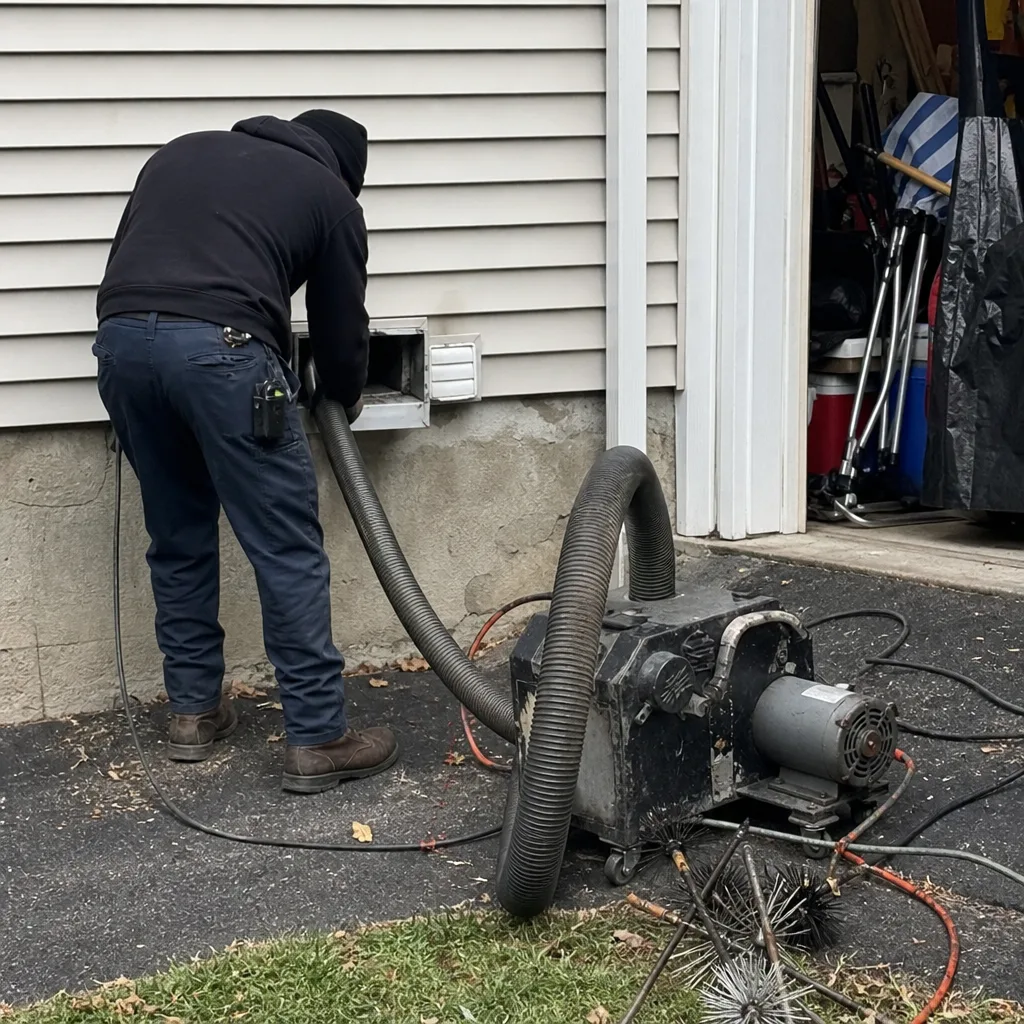 Before
 After
After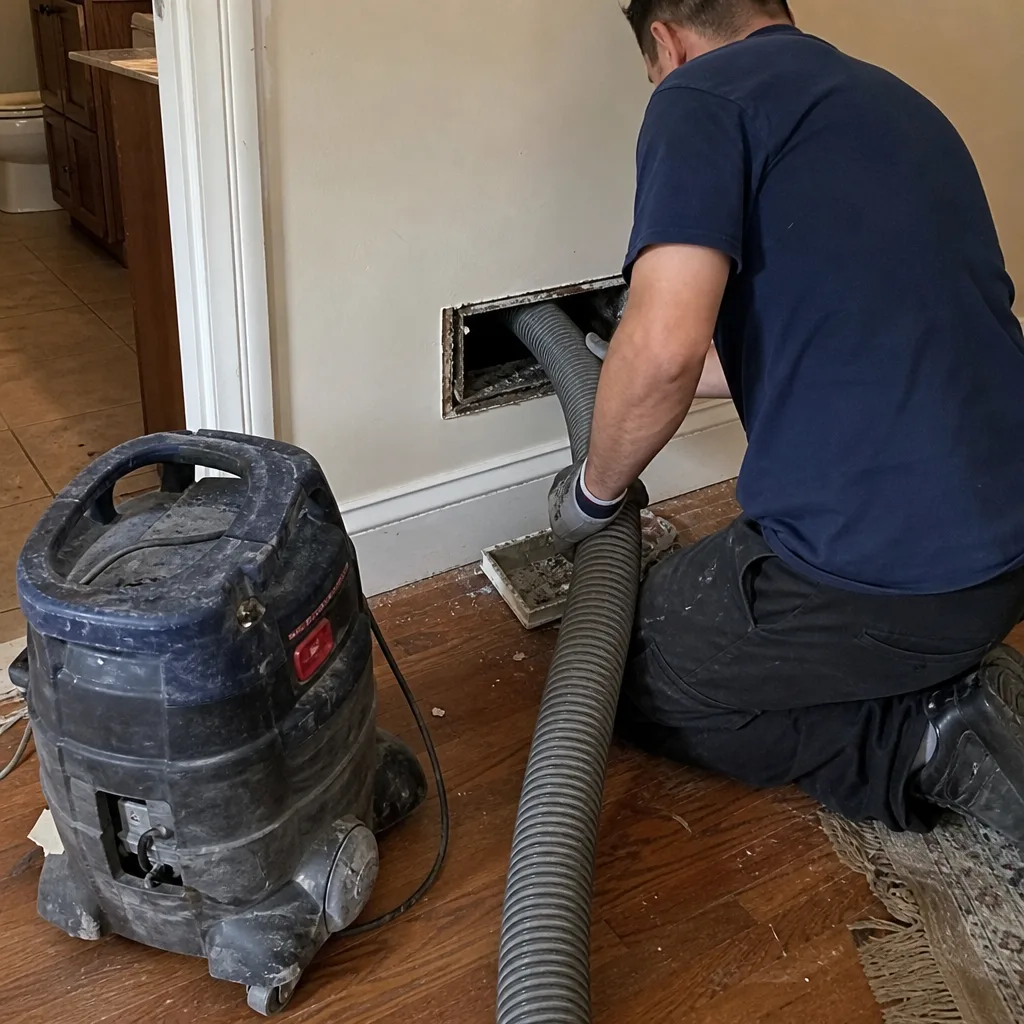 Before
 After
After